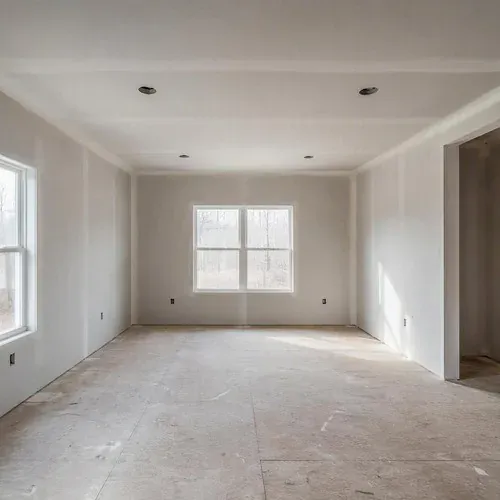
Residential Drywall Installation
New builds, basement finishing, additions and garage conversions. Board hung, taped and finished to Level 4 or Level 5.
Residential Drywall Installation ›
St Catharines Elite Drywall installs insulation and drywall together for homeowners, builders and general contractors across the Niagara Region. Exterior walls, basement and below-grade walls, garage and unheated-space separations, cathedral and vaulted ceilings, and interior walls insulated for sound rather than heat.
The value sits in the assembly behind the board. Batt and acoustic insulation to Ontario Building Code R-values, vapour barrier placed on the warm side and properly sealed at seams, electrical boxes and every penetration, then boarded, taped and finished to a paint-ready surface. A poorly sealed barrier lets warm humid air reach cold sheathing and condense inside a wall you cannot see.
One crew from insulation through to finish means the barrier gets checked before it disappears, insulation is never boarded over before inspection, and a single contractor is accountable for the whole assembly. More than twenty years, over 1,500 completed jobs, $2M liability, WSIB covered.
If you are reading this during a renovation, you have a narrow window and it closes the day the board goes up.
Insulating an open wall is quick and inexpensive. Insulating a finished wall means opening it again, which costs several times more and creates a repair job that did not need to exist.
So if there is any part of your project where the framing is exposed and the insulation is questionable, deal with it now.
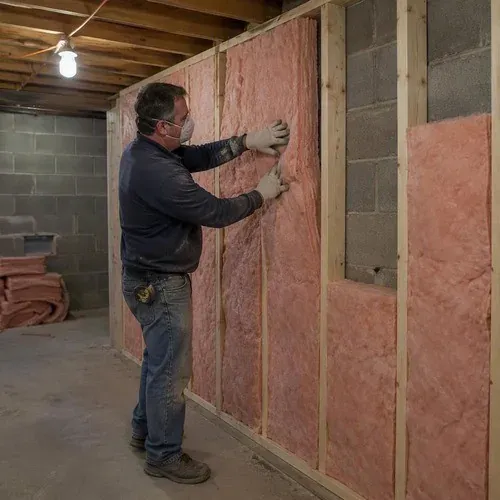
The obvious one. In older homes across the region we regularly open walls to find insulation that has settled, compressed or was never adequate for our winters in the first place.
The highest-return area in most Niagara houses. A large share of the heat lost from a home goes through uninsulated basement walls, and a finished basement over bare concrete is cold no matter how good the furnace is.
The wall between an attached garage and the living space, and the ceiling below a bonus room over a garage. Both are commonly under-insulated and both are noticeable.
Bathrooms, bedrooms, home offices, media rooms and laundry rooms. Insulation in an interior wall does nothing for your heating bill and a great deal for how the house feels to live in. See drywall soundproofing.
Technically demanding, because ventilation above the insulation has to be maintained. Getting this wrong causes condensation and ice damming rather than just poor performance.
Required insulation values are set by the Ontario Building Code and vary by assembly type, by whether the space is heated, and by the construction method used. A basement wall, an exterior above-grade wall and a cathedral ceiling all have different requirements.
The critical scheduling point, and the one that costs people money when it is missed: insulation is inspected before drywall goes up.
If you board over insulation that has not been inspected, the inspector cannot sign it off, and the only remedy is opening the wall back up. We have seen it happen on owner-managed renovations more than once.
So we do not board over uninspected work. If your permit requires an inspection at that stage, we will wait for it, and we will tell you if we think the schedule is heading toward a problem.
This is where a lot of otherwise good renovation work goes wrong, and it is worth understanding.
Insulation slows heat transfer. The vapour barrier stops warm, moist indoor air from reaching a cold surface inside the wall assembly. They only work as a pair.
In our climate the vapour barrier belongs on the warm side, meaning the interior face of the insulation. Placed incorrectly, or installed with gaps, warm air carrying moisture reaches the cold sheathing behind the insulation and condenses there.
That condensation does not evaporate. It accumulates inside a wall you cannot see, and it produces damp insulation, degraded framing and eventually mould, usually discovered years later during an unrelated renovation.
The detail that matters most is sealing. Seams lapped and taped, penetrations for electrical boxes and plumbing sealed rather than just poked through, and the perimeter continuous at the top and bottom plates. A vapour barrier with unsealed penetrations is decorative.
This is the part of the job nobody sees and the part that decides whether the wall lasts.
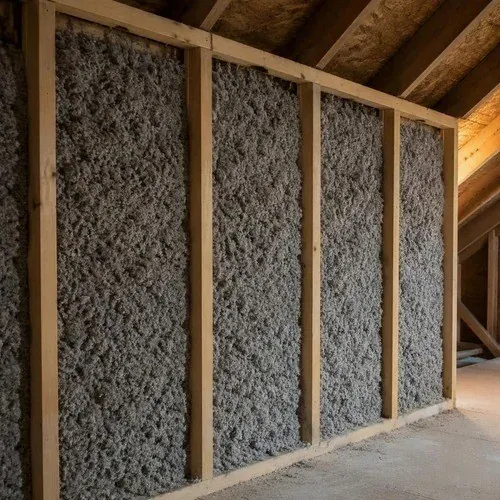
The practical argument for bundling.
No gap between the insulation contractor finishing and the drywall crew becoming available, which on a busy season can be weeks.
The people installing the vapour barrier are the people boarding over it, which means it gets checked properly before it disappears.
If something is wrong with the assembly, there is one contractor responsible for it rather than two pointing at each other.
Which matters most on occupied renovations and on commercial projects with tight sequencing.
If you are getting a drywall quote from us anyway, ask us to price the insulation alongside it. The marginal cost of doing both while the wall is open is much smaller than most people expect.
A few stages from recent work. Every job ends with a raking-light inspection before we call it finished.
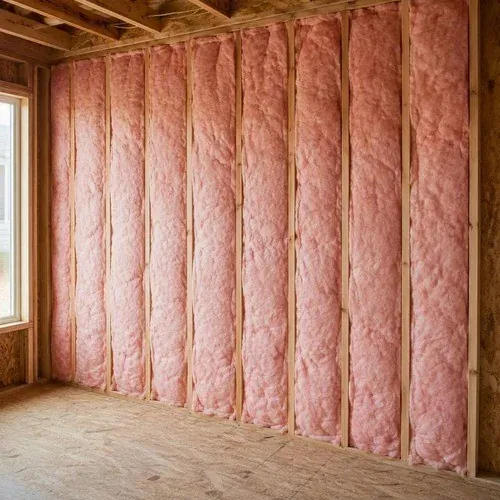
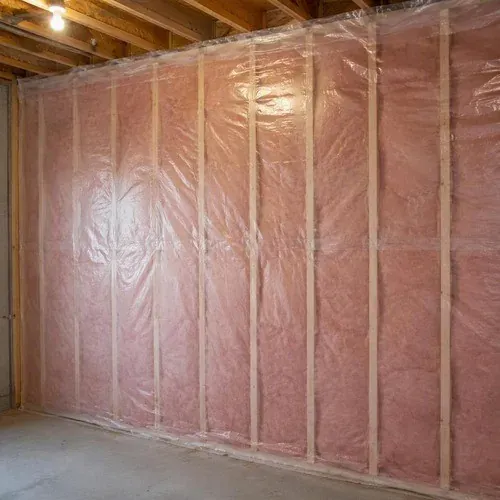
Either works. Most clients have us supply it as part of the quote, which keeps the material matched to the assembly. If you have already bought it, we will install what you have and tell you if we think it is the wrong product for the location.
It depends on your construction method and the specifics of your assembly, and the code requirements are periodically updated. We will confirm the current requirement for your project at the quote, rather than you working from a number on a website that may be out of date.
On permitted work, yes, in almost every case. This is the single most common scheduling mistake on owner-managed renovations, and it is expensive to fix.
There are blown-in methods that inject insulation through small holes in the existing surface. They have real limitations, particularly around vapour barrier placement, which cannot be corrected without opening the wall. We will be honest about what that approach can and cannot achieve for your situation.
Related but not identical. Both fill the cavity and both help with sound, but products made for acoustic performance are typically denser and are designed to absorb sound energy rather than primarily to resist heat flow. For an interior wall where noise is the concern, the acoustic product is worth the difference.
New builds, basement finishing, additions and garage conversions. Board hung, taped and finished to Level 4 or Level 5.
Residential Drywall Installation ›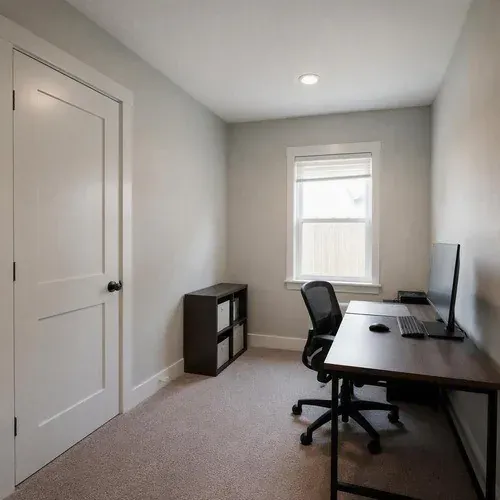
Resilient channel, dense board, acoustic sealant and decoupled assemblies for shared walls, home offices and media rooms.
Drywall Soundproofing ›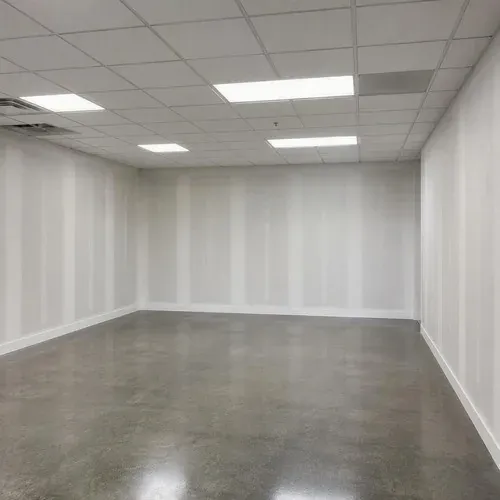
Steel stud partitions, retail and office fit-outs, fire-rated and acoustic assemblies, worked around your trades and your schedule.
Commercial Drywall Installation ›We cover every town in Niagara from our shop on Vine Street in St. Catharines. These are the areas where this service comes up most.
Tell us what you are dealing with and roughly where in Niagara you are. For repairs, a photo is usually enough for a number without a site visit.