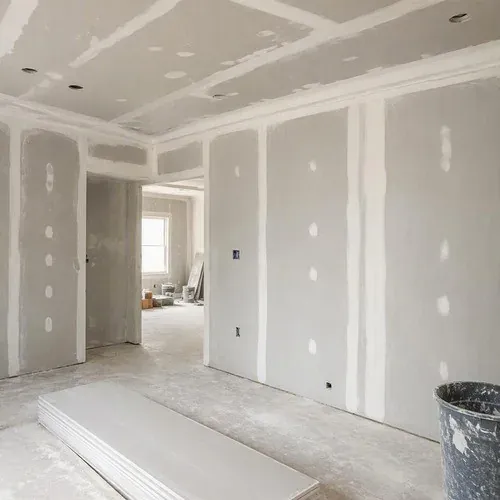
Plaster Crown Moulding Repair
Original cornices and decorative plaster run, cast and matched to the existing profile rather than boxed over.
Plaster Crown Moulding Repair ›
St Catharines Elite Drywall repairs lath and plaster walls and ceilings in older and heritage homes throughout the Niagara Region. Century properties in St. Catharines and Welland, Old Town homes in Niagara-on-the-Lake, canal-era housing in Thorold and Port Colborne, and farmhouses across Lincoln, Pelham and West Lincoln.
Plaster is not drywall and it does not fail like drywall. It grips wooden lath by squeezing through the gaps and hardening into keys behind it, and when those keys break the plaster separates while the surface still looks perfectly sound. We repair failing keys and drummy sections, settlement and seasonal cracks, water damage, and the damage left behind by previous incompatible repairs.
We also work through the repair-or-replace decision honestly, blend new drywall into original plaster in renovated rooms, and restore ornamental cornice. More than twenty years working on Niagara's older housing stock, fully insured and WSIB covered.
If your house was built before roughly 1950, the walls are probably not drywall. They are plaster, applied wet in coats over narrow wooden strips called lath, and they behave nothing like a sheet of gypsum board.
That distinction matters more than most homeowners realise. Plaster fails in different ways, for different reasons, and it responds badly to being treated as if it were drywall.
A general handyman will fill a plaster crack with premixed compound, sand it, and hand you an invoice. The crack will be back within a year, because the compound addressed the symptom and not the wall.
We have worked on plaster across Niagara's older housing stock for more than twenty years. Niagara-on-the-Lake's Old Town, the century homes in St. Catharines' Glenridge and north end, Welland's canal-era neighbourhoods and the older core of Port Colborne.
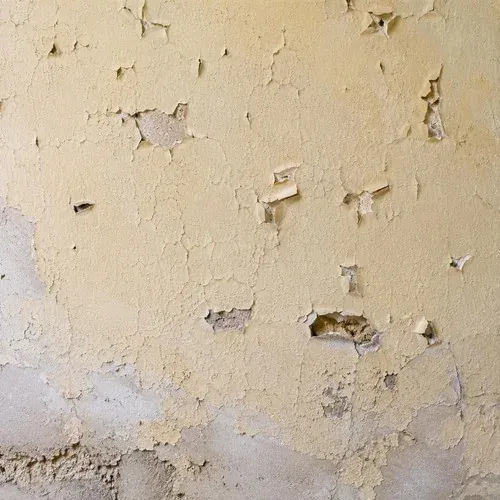
The most important failure mode and the one almost nobody has heard of, so it is worth explaining properly.
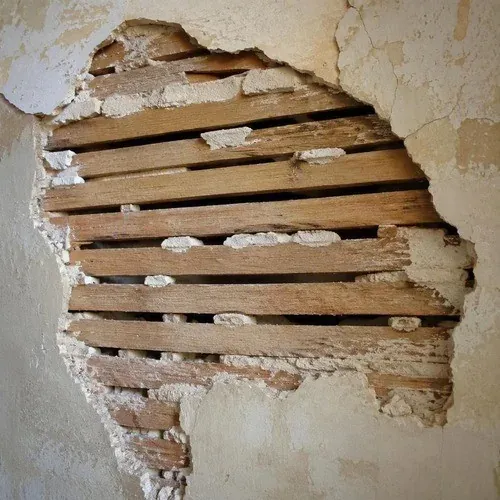
When plaster is applied, it is pushed onto the lath hard enough to squeeze through the gaps between the strips. Behind the lath, that squeezed-out material spreads and hardens into small hooks. Those are the keys, and they are the only thing holding your ceiling up.
Over decades, vibration, movement and moisture break them. When enough keys fail, the plaster detaches from the lath and hangs on nothing but itself. The surface can still look completely intact while this is happening.
That is why a plaster ceiling can appear fine and then come down.
Old houses move, and plaster is rigid. Cracks concentrate above door and window openings and along the junctions between ceilings and walls.
Plaster absorbs water readily and loses strength as it does. The staining is the visible part, and the softening behind it is the real problem.
Press gently, or tap, and you will hear the difference between plaster that is still keyed and plaster that is floating.
Very common. Incompatible fillers, patches that shrank away from the edges, drywall screwed over failing plaster without addressing what was underneath.
This is the decision every owner of an older Niagara home eventually faces, and you will get a strong opinion from almost every contractor you ask. Here is ours, with both sides.
Repair makes sense when:
Replacement makes sense when:
There is also a middle path that suits a lot of houses: repair the walls, replace a badly failed ceiling. Ceilings fail first because gravity works on them constantly, and walls in the same house are often in far better condition.
We will tell you which situation you are in. We are not going to talk you into a restoration you do not need, and we are not going to strip out sound original plaster because it is faster for us.
Niagara-on-the-Lake's Old Town holds one of the best-preserved concentrations of nineteenth century architecture in Ontario, and there are designated properties scattered through St. Catharines, Niagara Falls and the smaller towns as well.
If a property is designated under the Ontario Heritage Act, alterations affecting its heritage attributes may require municipal approval. Interior plaster can fall within that, depending on how the designation is written.
Our approach in these properties: retain original material wherever it is sound, match the surface character and profile of what is already there, and use methods that are compatible with the original construction. Where approval is needed, that process happens before the work, not after.
If you are unsure whether your property is designated, your municipal heritage planner can tell you. It is worth a phone call before any contractor starts.
Extremely common in renovated older homes, and usually handled badly.
The core problem is thickness. Traditional plaster over lath is typically thicker than a sheet of drywall, so a straight butt between the two leaves a visible step.
The fix depends on the situation. Sometimes furring the drywall out to meet the plaster plane. Sometimes tapering the transition across a wide feathered joint. Where the old wall is uneven across its whole surface, and older plaster often is, the best result usually comes from skim coating the entire wall so the room reads as one continuous surface rather than two eras meeting in the middle.
That last option costs more. It is also the difference between a renovation that looks finished and one that looks patched.
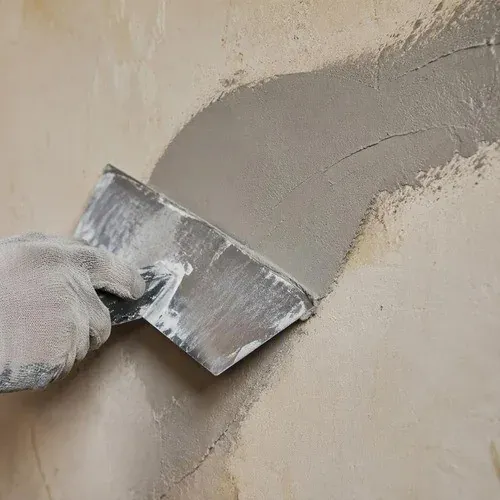
This section is about safety rather than appearance, so please read it if it applies to you.
A plaster ceiling that has lost its keys can come down as a single heavy slab. Not in pieces. This is a genuine hazard in a bedroom or above a stairwell.
Signs to take seriously:
If you are seeing sag or hearing hollow sections over an area people sleep or sit under, stop waiting for a convenient moment. Have it looked at.
Plaster work carries more variability than drywall, because what is behind the surface is not known until it is opened. We quote what we can see and flag what we cannot, rather than giving you a low number and revising it later.
See the Niagara drywall cost guide for broader pricing.
| Scope | Typical range |
|---|---|
| Crack repair, properly cut out and rebuilt | $350 to $700 per crack |
| Patch to a damaged wall section | $400 to $900 |
| Re-securing and repairing a drummy ceiling area | $800 to $2,000 |
| Full ceiling replacement, average room | $2,000 to $4,500 |
| Skim coating a full room to unify surfaces | $1,500 to $3,500 |
Plaster jobs need to be seen. Photographs help, and they do not tell us whether a ceiling is still keyed or whether a crack is active.
Tell us the age of the house, what you are seeing, and whether the property is designated. We will come out and give you an honest read on what is sound, what is not, and what your realistic options are.
A few stages from recent work. Every job ends with a raking-light inspection before we call it finished.
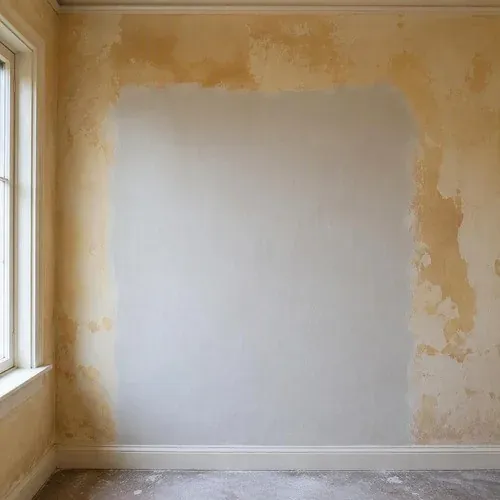
Usually a good deal of it can be saved. Failure is rarely uniform across a house. Walls are often in far better condition than ceilings, and a single bad room does not mean the whole house needs stripping.
Push a pin into the wall in an inconspicuous spot. Drywall accepts it easily. Plaster resists and will often chip slightly. Age is a good guide too: pre-1950 construction in Niagara is very likely plaster.
Because the plaster has separated from the lath in that area and the keys have failed. The surface can look perfect while this is happening, which is exactly why it is worth investigating rather than ignoring.
Original plaster has a surface character that varies from house to house and often from room to room. We match it as closely as the material allows. On a wall with pronounced character we will show you a sample area before committing to the full surface.
Yes, and we work within the constraints rather than around them. If municipal approval is needed for the work, that happens first.
Per square foot, generally yes. It is slower, more skilled and less predictable. On a small repair the difference is modest. On a full ceiling, replacement with drywall is often the cheaper route, which is exactly the trade-off discussed above.
Original cornices and decorative plaster run, cast and matched to the existing profile rather than boxed over.
Plaster Crown Moulding Repair ›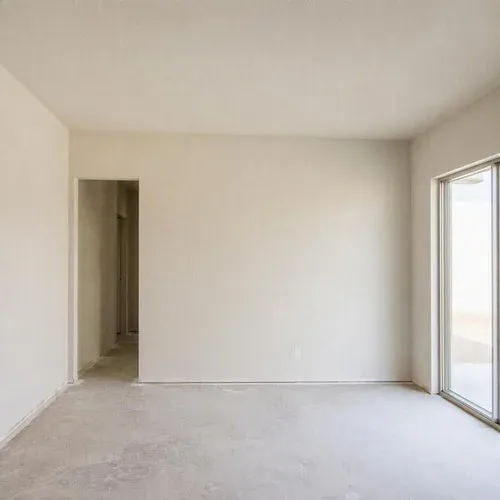
Knockdown, orange peel, swirl and stipple matched across a patch so the repaired area reads as original.
Textured Ceiling & Wall Repairs ›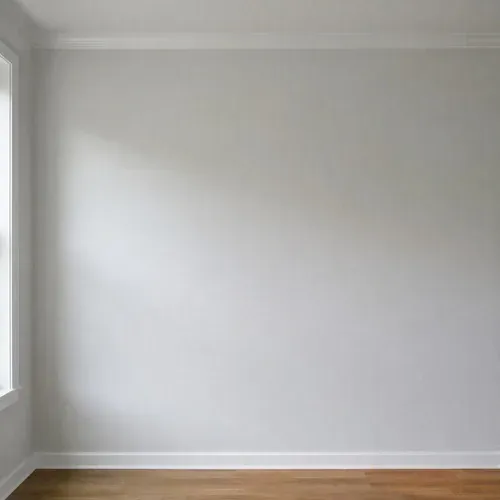
Doorknob holes, cracked seams, nail pops and impact damage patched and blended so you cannot find the repair afterward.
Drywall Repair ›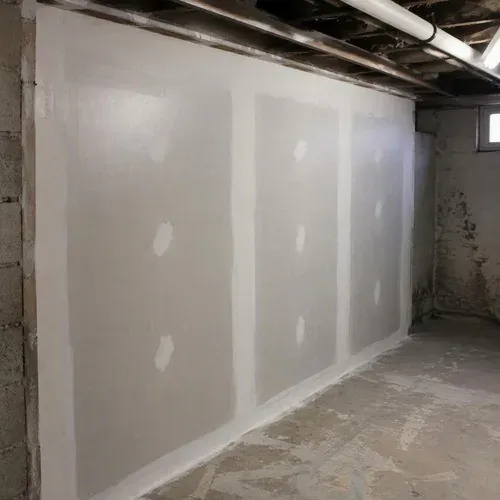
Stained ceilings, sagging board and flooded basements. Wet material out, cavity dried, new board in and finished.
Water Damage Drywall Repair ›We cover every town in Niagara from our shop on Vine Street in St. Catharines. These are the areas where this service comes up most.
Tell us what you are dealing with and roughly where in Niagara you are. For repairs, a photo is usually enough for a number without a site visit.