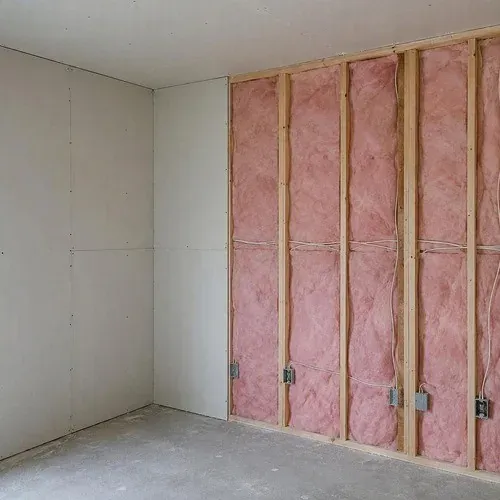
Drywall Insulation
Batt and blown insulation with vapour barrier detailed properly before the board goes on and hides it for good.
Drywall Insulation ›
St Catharines Elite Drywall installs wall and ceiling soundproofing for homeowners, landlords and businesses across the Niagara Region. Semi-detached and townhouse party walls, basement apartments and secondary suites, student rentals near Brock and Niagara College, home offices and media rooms, and guest room separations in Niagara Falls accommodation.
Effective soundproofing is an assembly rather than a product. Decoupling with resilient channel, acoustic insulation or mineral wool filling the cavity, added mass through double layers or sound-rated board, damping compound between layers, and sealing at perimeters, outlets and every penetration. That last step is the one most attempts skip and the one that undoes everything else.
Airborne noise and impact noise are different problems needing different treatments, which is why adding mass to a basement ceiling does almost nothing for footsteps overhead. We will tell you what is realistically achievable before you spend anything, including when a treatment is not worth doing. More than twenty years, fully insured and WSIB covered.
Before anything else, it matters what kind of noise is bothering you, because the fix is different for each one.
Tell us which of these you are dealing with when you get in touch. It genuinely changes the recommendation.
This is the most useful thing on this page, and it explains why a previous attempt may have done nothing.
travels through the air and then vibrates the wall or ceiling. Voices, television, music, barking. It is reduced primarily by adding mass and sealing gaps.
is created by something physically striking the structure. Footsteps, furniture moving, a dropped shoe. The sound energy is already inside the building's framing, and adding mass to the ceiling below does very little about it.
This is why people add a second layer of drywall to a basement ceiling, hoping to quiet the footsteps from upstairs, and hear almost no difference. They treated an impact problem with an airborne solution.
Impact noise needs decoupling, meaning the finished surface has to be physically separated from the framing so vibration cannot pass directly through. That is a different construction detail, and it is the one that actually works.
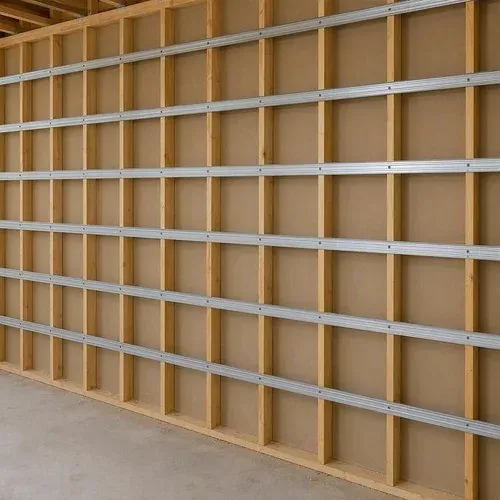
Metal channel fixed across the framing, with the drywall attached to the channel rather than to the studs or joists. The board is no longer rigidly connected to the structure, so vibration has to cross a gap. This is the single most effective measure for impact noise, and it also helps meaningfully with airborne.
Mineral wool or acoustic batt filling the cavity absorbs sound energy inside the wall rather than letting it resonate. A hollow wall cavity behaves like a drum. A filled one does not.
More mass means more energy required to vibrate the surface. A second layer of 5/8" board, or one of the purpose-made sound-damping boards, adds measurable reduction for airborne noise.
A viscoelastic compound applied between two layers of board converts vibration into a small amount of heat. It is genuinely effective and it is only possible during construction, which is why it is worth knowing about before the wall goes up.
The one everybody skips, and the one that undoes everything else.
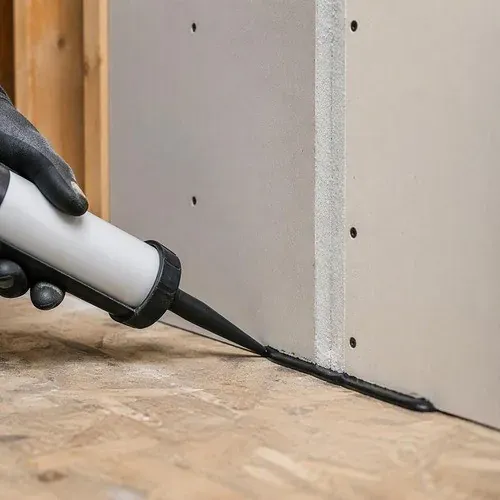
Sound behaves a great deal like water. A small unsealed gap at the floor, an electrical box cut through the board, or an unsealed perimeter joint will let a disproportionate amount of sound straight through. You can build a beautifully decoupled, double-layered, insulated wall and lose a large share of the benefit through a back-to-back outlet box.
Most DIY soundproofing attempts fail on exactly this point. We seal perimeters, pad and offset electrical boxes, and treat every penetration as a leak.
Here is where we differ from most of what you will read online.
A well-executed treatment can take a neighbour's television from clearly audible to a faint murmur you stop noticing. It will not make the wall silent, and anyone telling you otherwise is selling something.
A wall that is currently a single layer of board on studs with an empty cavity has a lot of room for improvement. A wall that is already insulated and double-boarded has much less.
Sound travels around a treated wall through the floor, the ceiling, shared ductwork and the joists. Treating one wall in a room where sound is also coming through the floor gives a partial result, because you addressed one of several paths.
If budget means doing the wall but not the ceiling, you will notice a difference and you will still hear the footsteps.
We would rather have this conversation before you spend the money than afterwards. If we do not think a treatment will get you where you want to be, we will say so.
The most common request we get. Party walls in older semis across St. Catharines, Welland and Niagara Falls were frequently built with minimal acoustic separation.
Both directions matter here: the tenant's privacy and the owner's. Ceiling treatment between the units is usually the priority, and impact noise is almost always the complaint.
Thorold and north St. Catharines in particular. Where several unrelated tenants share a house, noise between rooms is the most common source of friction and the most common reason a landlord calls us.
Growing steadily. A home office needs privacy in both directions for calls. A media room needs containment so the rest of the house is not part of the film.
Guest room separations in Niagara Falls accommodation, and acoustic separation between dining areas and kitchens. See commercial drywall installation.
The last line is the important one. Doing this while a wall is already open costs a fraction of doing it later, because the expensive part of a retrofit is removing and replacing the existing surface before the acoustic work even starts.
If you are renovating anyway and noise is on your mind at all, raise it now.
| Scope | Typical range |
|---|---|
| Single wall, retrofit, insulation and second layer | $1,200 to $2,500 |
| Single wall, full treatment with decoupling and damping | $2,200 to $4,500 |
| Basement ceiling, average room | $2,500 to $5,000 |
| Treatment built in during a renovation | roughly 30% to 40% less than retrofit |
This service is worth a conversation rather than a form. Tell us what you are hearing, where you are hearing it, and what the room is used for.
We will tell you what is realistically achievable, what it would take, and whether it is worth doing.
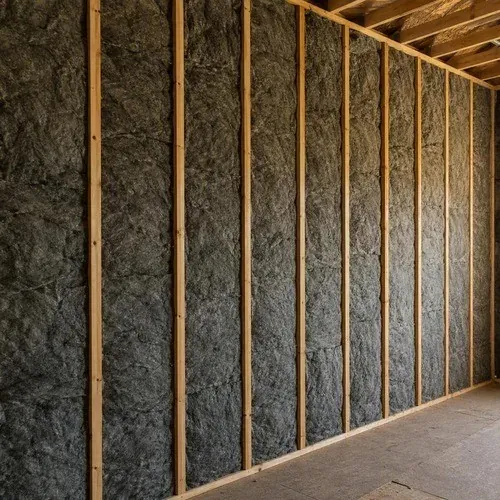
A few stages from recent work. Every job ends with a raking-light inspection before we call it finished.
No. A good treatment substantially reduces it, often to the point where you stop noticing. Complete elimination is not realistic in an existing building and we will not claim it.
Partly. Adding a layer of board with damping compound over the existing surface helps with airborne noise and requires no demolition. You lose the ability to insulate the cavity or decouple, so the result is meaningfully less than a full treatment. It is a reasonable middle option.
It helps, and on its own it is the least cost-effective approach. The same money spent on insulation plus a second standard layer plus proper sealing usually outperforms a single sound-rated board.
For airborne noise: fill the cavity, add mass, seal everything. For impact noise: decouple, or accept a limited result.
Only if we decouple the ceiling. Adding mass alone will disappoint you, which is exactly why we ask what kind of noise you are dealing with before quoting.
Yes, and it is common work for us. Whether the ceiling has to come down depends on how much reduction you need, and we will walk you through both options.
Batt and blown insulation with vapour barrier detailed properly before the board goes on and hides it for good.
Drywall Insulation ›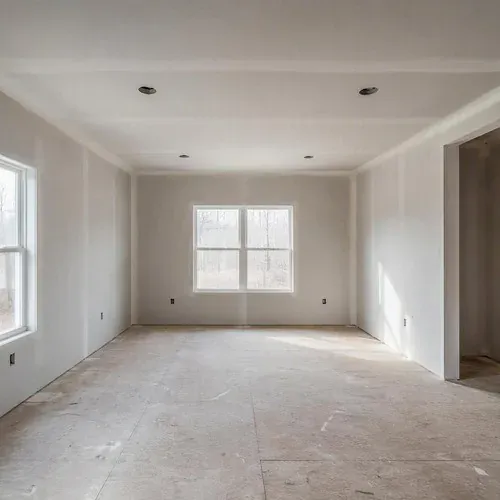
New builds, basement finishing, additions and garage conversions. Board hung, taped and finished to Level 4 or Level 5.
Residential Drywall Installation ›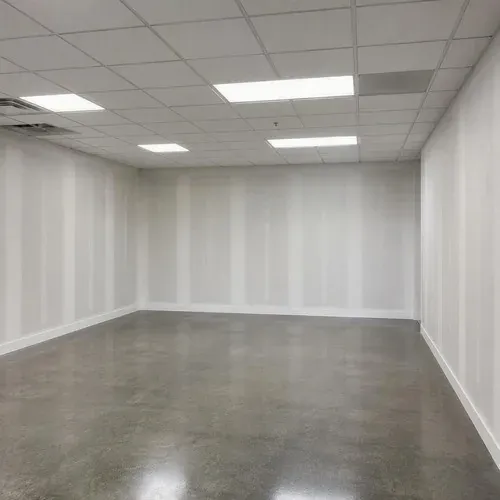
Steel stud partitions, retail and office fit-outs, fire-rated and acoustic assemblies, worked around your trades and your schedule.
Commercial Drywall Installation ›We cover every town in Niagara from our shop on Vine Street in St. Catharines. These are the areas where this service comes up most.
Tell us what you are dealing with and roughly where in Niagara you are. For repairs, a photo is usually enough for a number without a site visit.